Knack and the No-Code Revolution: How AI Is Quietly Transforming How Businesses Build Software
Source: Knack.com
For years, businesses have struggled with a familiar bottleneck: the need for custom software tools far outpacing the availability and affordability of skilled developers. While Knack has been around for over a decade, the recent proliferation of AI has amplified its capabilities and put the company at the center of a quiet but powerful shift in how businesses build and use internal software. As companies face rising costs, tighter labor markets, and pressure to make more data-informed decisions, Knack provides a low-code, full-stack solution that lets organizations build custom applications, workflows, and databases without engineering-heavy teams.
Source: Baytech Consulting
What Knack Enables Businesses to Build– And Why it Matters Now
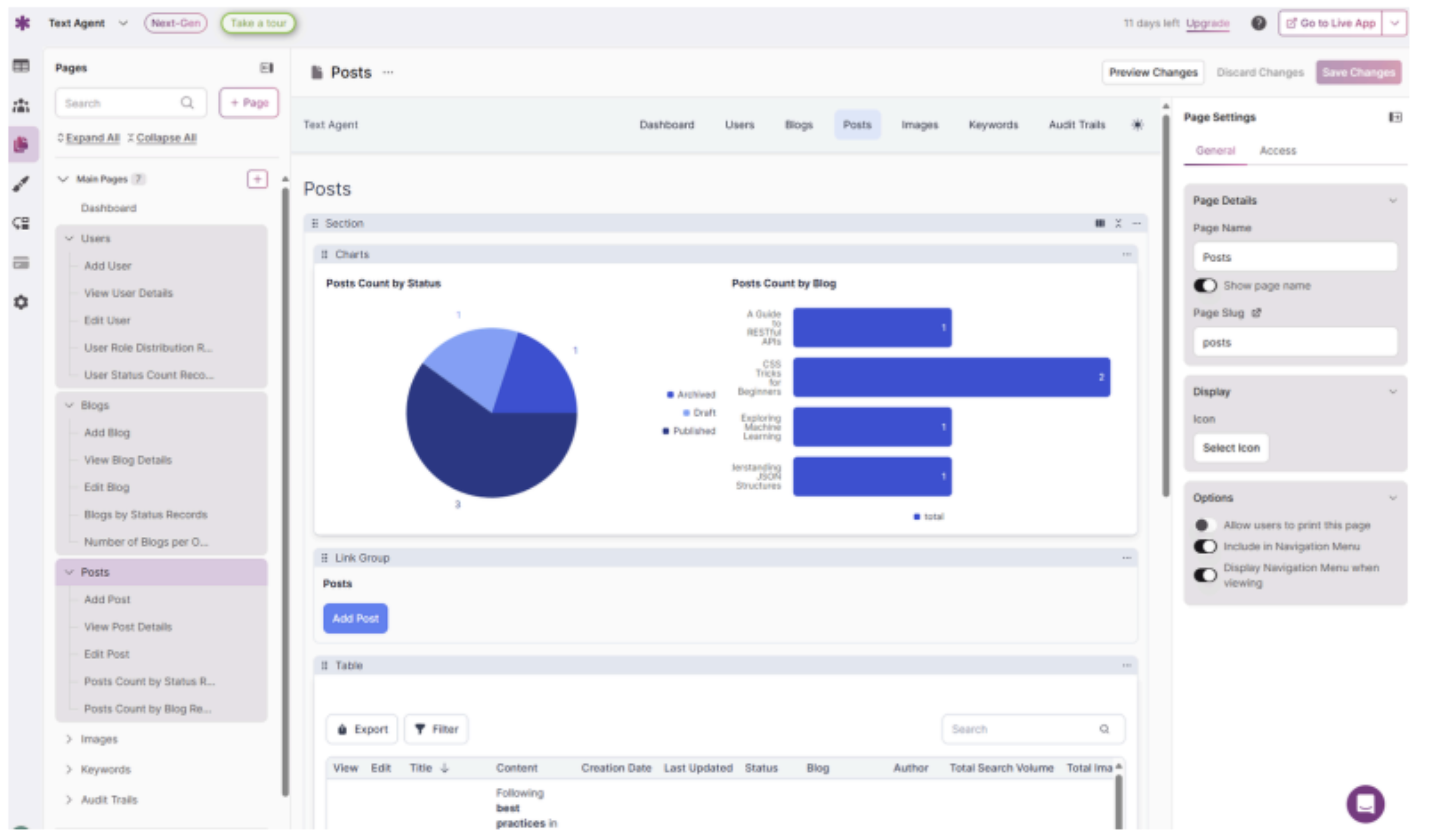
Knack is a no-code/low-code platform that empowers organizations to build a wide range of custom software applications without relying on traditional development teams. Using its visual drag-and-drop interface, employees across operations, finance, logistics, HR, and administration can design and deploy tools in-house, from customer relationship management systems (CRMs) and client-facing portals to internal dashboards, inventory tracking systems, workflow automations, and compliance monitoring platforms. By integrating data modeling, user permissions, interface design, and process automation, Knack replaces the fragmented combination of spreadsheets, SaaS tools, and outsourced development that many organizations previously relied on. This unified approach enables companies to turn scattered data into actionable insights, streamline operations, and respond more quickly to evolving business needs.
The concept of no-code is not new. But the landscape around it has changed.
AI has increased Knack’s value
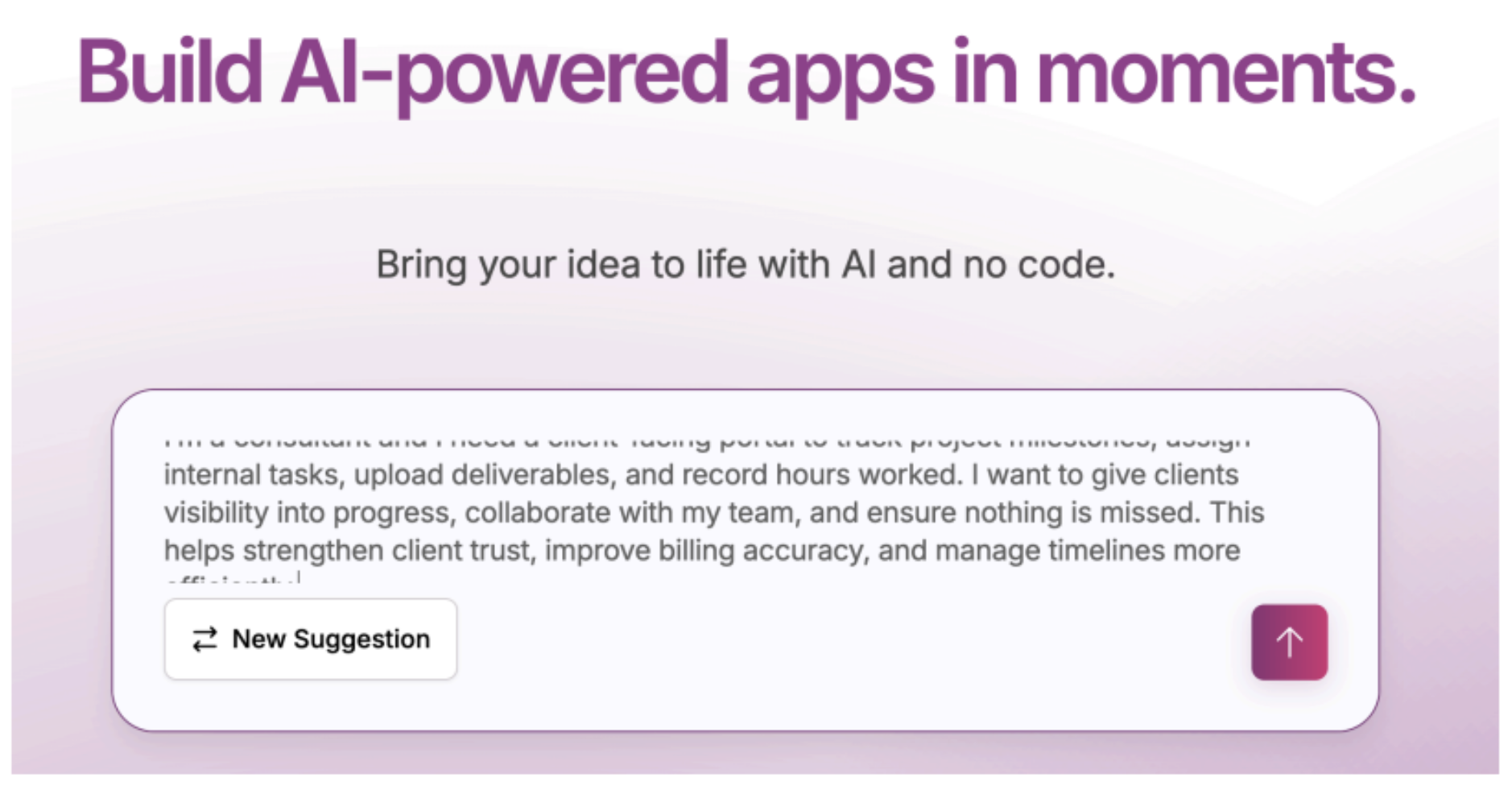
While Knack has long enabled non technical teams to build custom tools, its new AI-powered features significantly reduce the time and expertise needed to get started. Users can now describe what they need, for instance, a small firm might use Knack to build a scheduling system that sends automated approval requests and notifications to clients and Knack generates a working application within minutes.
Source: Knack.com
AI transforms Knack from a useful operational tool into something more strategic: a platform that helps companies make smarter, more data-informed decisions. By centralizing information and making it accessible through custom dashboards and workflows, Knack enables organizations to turn scattered data into actionable insights, without hiring data engineers to build internal systems from scratch.
Why Businesses Are Turning to Knack Now
A number of converging business pressures have made Knack especially attractive to firms seeking to modernize their operations. First, organizations increasingly depend on data-informed decision making, yet many lack the tools to centralize their information in a way that produces clear, actionable insights. Knack addresses this need by enabling non-technical teams to build real-time dashboards, workflow trackers, and analytics tools that bring structure and visibility to previously scattered data. Second, the rising cost of software development has pushed companies to consider alternatives to expensive engineering teams and outsourced development. Knack’s subscription-based model offers a substantially cheaper pathway to digital transformation, particularly for small and mid-sized firms that cannot absorb six-figure custom development costs.
These economic constraints are compounded by a persistent talent gap in the tech labor market. Even well-resourced firms struggle to recruit and retain qualified developers, making no-code and low-code platforms an appealing substitute. At the same time, the pace of business has accelerated to the point where traditional development timelines, often measured in months, no longer align with operational demands. Knack allows teams to prototype, test, and refine tools within days, bypassing IT backlogs and enabling rapid iteration in volatile market conditions. Although the company remains relatively low-profile compared with more recognizable competitors (Airtable, Quickbase, Bubble, Xano, Softr, Lovable, Bolt, and Replit), its user base has expanded quietly but steadily which now include Spotify, Honda, Panasonic, Cat, Zendesk, World Vision, and Harvard University. Many of these organizations have discovered that Knack offers deeper backend flexibility, stronger workflow logic, and more scalable data structuring than many popular alternatives. As a result, Knack now powers thousands of internal systems across nonprofits, universities, logistics networks, healthcare organizations, and small businesses.
Tradeoffs: No-Code Isn’t a Fit for Every Situation
Despite its versatility, Knack is not a universal substitute for traditional software development. No-code platforms often face scalability constraints when dealing with extremely large datasets or high-volume usage, and they offer limited customization for highly specialized interfaces or advanced logic. Vendor lock-in is another practical concern: because applications are built entirely within Knack’s ecosystem, migrating to another platform can be difficult and costly. Additionally, complex or mission-critical workflows may still require technical oversight to ensure reliability and security. Nevertheless, for most internal business applications, particularly those centered on operations, workflows, and data organization, Knack provides a sufficiently powerful and far more efficient alternative to custom development.
A Quiet Revolution in How Businesses Build Software
Knack’s growth reflects a broader shift happening across industries: companies are rethinking what kind of technical capability they need to operate efficiently. Instead of outsourcing expensive development or forcing rigid off-the-shelf software to fit their processes, businesses are choosing tools that bring development power closer to operations. Knack’s combination of affordability, AI-powered features, and low-code flexibility positions it at the heart of this transition. It empowers organizations to build the systems they need, make better use of their data, and move faster in an increasingly competitive environment, all without a large engineering team.
Knack has existed quietly for years, but AI and rising business pressures have amplified its relevance. In an environment where companies need to make smarter decisions, respond quickly to change, and operate with lean teams, platforms like Knack don’t just solve technical problems, they reshape how organizations build, adapt, and compete.
For businesses that want to modernize without the expense and time commitment of traditional development, Knack may be less a tool and more a turning point.