Rivian: Chasing Electrical Elite
Background
Rivian Automotive is an American based, and purely electric, car manufacturer that came onto the scene in the 2010s. Founder RJ Scarnige, a mechanical engineer coming out of MIT, began his automotive industry journey with high values around environmental sustainability while also creating a high performance vehicle. Rivian prides themselves on being a technology driven company before just a “car manufacturer”. Their sleek, futuristic, and even rugged design is attracting customers who would not have otherwise considered going electric with their vehicle.
Marketing
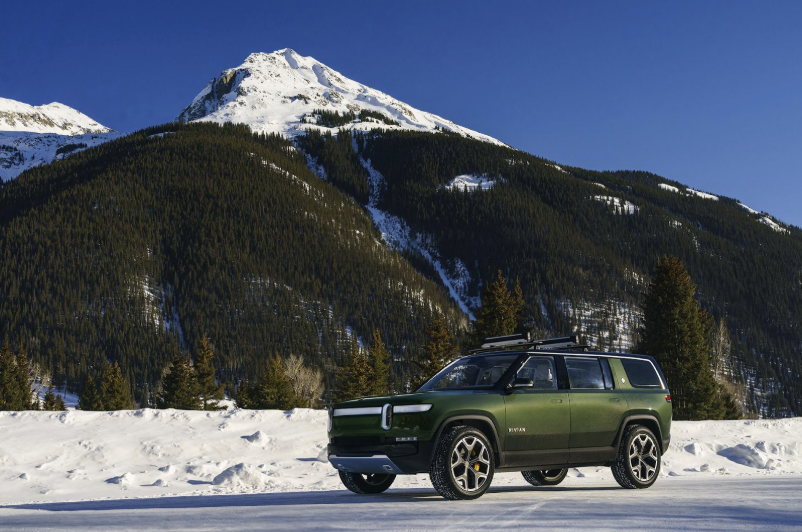
Rivian does an amazing job at intertwining their focus of sustainability and real-world utility, prioritizing performance just as much as keeping the future environment of the world cleaner. In marketing, Rivian highlights that their products will be capable of anything, and are equipped for camping, overlanding, family travel etc. Typically, electric vehicles are not thought of to be high on the list for people frequently trying to travel long distances through lots of different conditions. Rivian on the other hand has made it known that their cars can handle snow, rock, and sand while also maintaining comfort, safety, and refinement. Rivian checks all the boxes for their demographics, aiming at four core pillars: “Affluent outdoor explorers”, “Family adventure buyers”, those focused on Technology and sustainability , and commercial buyers.

Source: Luxe Digital
Disrupting the Industry
Rivian burst onto the EV scene with trucks and SUVs, something that was not commonly being done at the time. This created a compromise between truck people and eco focused people, giving the best of both worlds. Rivian has found major success with the R1T (pickup truck) and the R1S (SUV), and has implemented innovative technology using a “skateboard platform” for its chassis, which is the structural support/backbone for a car which includes components such as the engine(s), transmission, axels, wheels, and suspension systems. Unlike most cars with a skeleton like chassis, the Rivian uses one that truly is flat and skateboard like. Rivians are powered by 2, and even sometimes 4 electric motors, located in the front and back of the car which are completely designed, engineered, and manufactured by the Rivian team. This technology however is not cheap, especially as you move up the ranks with what motors your car is equipped with, so a key focal point for the future of Rivian is to cut down prices in the R2 vehicle lines.
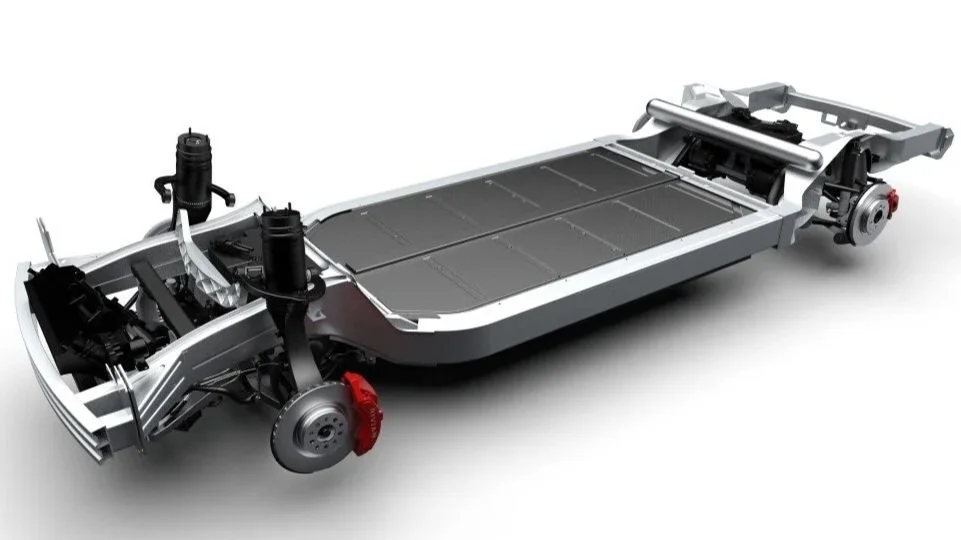
Source: WGLT
Introduction of AI
The meticulous production of the Rivian automobiles remains to be costly work for the company, and Scarnige as the CEO has been trying to work out alternatives involving AI. A startup founded by Scarnige himself, Mind Robotics, is attempting to build AI-powered “robots” that can perform the physical work within Rivian automotive plants and factories. These AI robots are hopefully going to be able to handle Rivian parts, assemble its components, and handle items like the wiring harnesses. Wiring harnesses are the cable system of wires, connectors, and terminals, carrying electrical signals throughout a vehicle, which is evidently major in an electric powered car. These systems act as the nervous system for the car, powering functions like engine ignition, lighting, braking systems, and its battery. This initiative would be a major advantage to the company as they have been struggling with high costs in production of their vehicles. Scaringe hopes to have the first round of robots up and running by the end of the year.
Financial Side
Rivian attracted major strategic investors before going public, including Amazon, Ford Motor Company, and the Volkswagen Group. A major software opportunity comes from Rivian’s partnership with Amazon, which ordered up to 100,000 electric delivery vans in 2025. They also have made the most of their relations with Volkswagen, providing them with Rivian's electrical architecture and software tech. Their software earnings have actually provided a higher margin than the vehicles themselves. Even though Rivian has improved their yearly revenue, they are still a victim to their immense costs, including building new factories, engineering, production, and marketing/corporate costs. All in all, the untapped potential Rivian has in the future is very enticing as they seem to have a plan to cut down costs and turn the corner to profitability.