SpaceX: The Biggest IPO in History is Coming
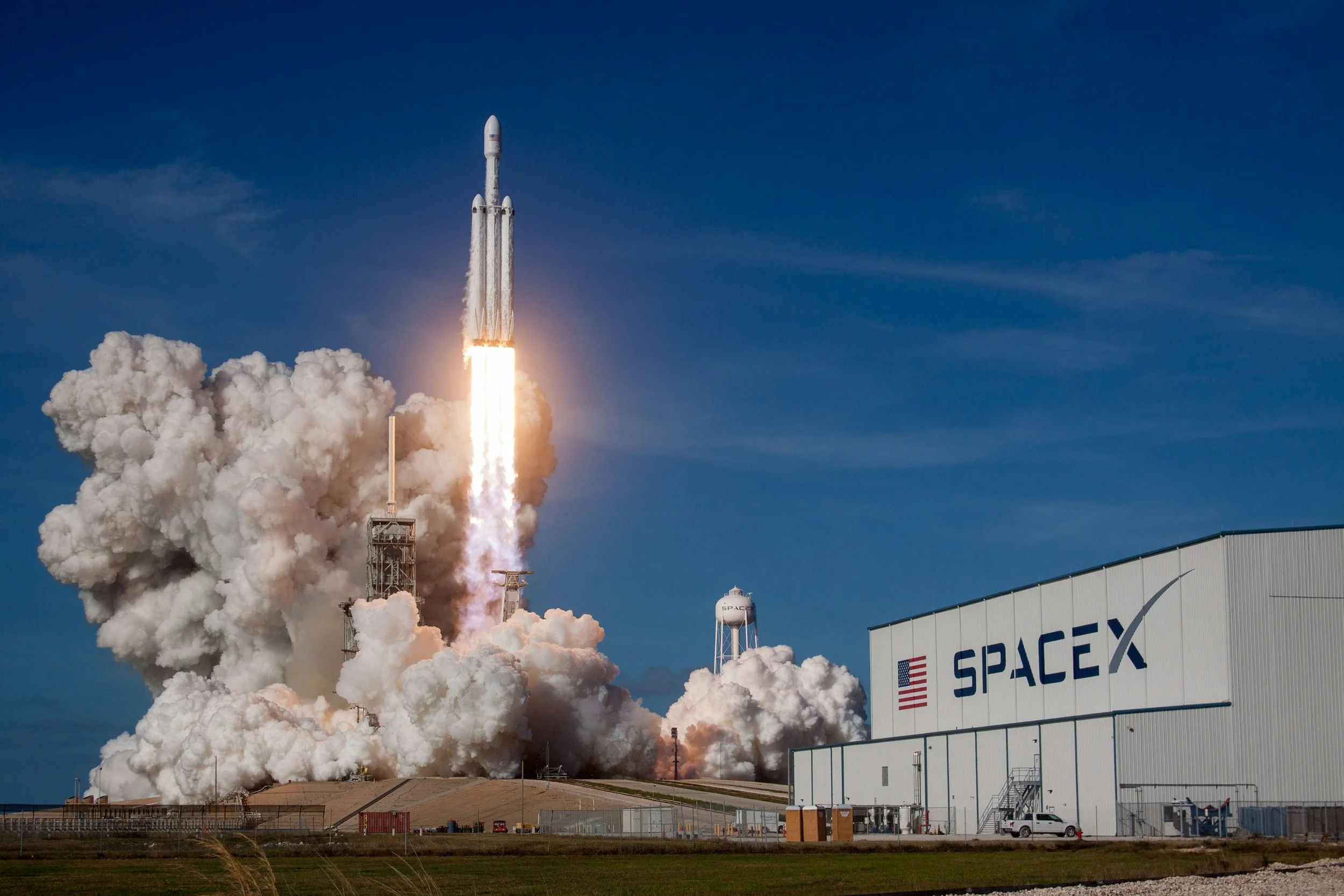
Source: SpaceX
SpaceX, officially Space Exploration Technologies Corp., is an American aerospace company founded in 2002 by Elon Musk. The goal from day one was straightforward: get to Mars. To do that, Musk figured out pretty quickly that rocket costs needed to drop dramatically, because nobody was going to fund a Mars program at the prices NASA was paying. That obsession with cutting costs is what shaped everything about how SpaceX operates.
For almost 25 years, SpaceX stayed private, which is unusual for a company this size. Most companies go public long before they hit the kind of scale SpaceX has reached. Musk resisted it for a long time, but that is now changing. In early April 2026, SpaceX quietly filed for an IPO, targeting a June listing that could raise up to $75 billion at a valuation of $1.75 trillion. That would make it the largest public debut ever, passing Saudi Aramco's $29 billion raise in 2019.
What Makes SpaceX Worth That Much
The rocket business alone does not explain a $1.75 trillion valuation. What is Starlink? Starlink is SpaceX's satellite internet service, and it has grown faster than most people expected. The service brought in around $16 billion in revenue and $7.5 billion in EBITDA in 2025, with 9.2 million subscribers across 150 countries, doubling its user base for two straight years. The rockets gave SpaceX the ability to build Starlink cheaply. But Starlink is the business that actually justifies the valuation.
On the launch side, the numbers are also pretty hard to argue with. SpaceX conducted over 160 launches in 2025, more than half of all launches by every company and nation-state on Earth combined. Their Falcon 9 rocket has been reused dozens of times per booster, with one specific booster completing 32 separate launches. That reusability is what lets them undercut everyone else on price and still make money.
The IPO Details
The five banks leading the deal are Bank of America, Citigroup, Goldman Sachs, JPMorgan Chase, and Morgan Stanley, with 16 other banks in smaller supporting roles. The roadshow is planned for the week of June 8th, where SpaceX executives will pitch institutional investors. One day earlier, around 125 financial analysts from the 21 banks involved are scheduled to sit down with the company.
One thing worth noticing about how SpaceX is handling this is the retail investor angle. SpaceX CFO Bret Johnsen told the group of bankers that "retail is going to be a critical part of this and a bigger part than any IPO in history." They are planning to host 1,500 retail investors at a major event on June 11th, and every day, investors in the UK, EU, Australia, Canada, Japan, and Korea will also be able to participate. That is a deliberate move. SpaceX has always had a massive fanbase of regular people who have followed their launches for years, and they want those people to be part of the IPO.
The Musk Factor
You cannot talk about SpaceX without talking about Elon Musk, and right now, that is genuinely a complicated topic for the company. On one hand, Musk is the reason SpaceX exists and the reason it has pushed as hard as it has. On the other hand, his political involvement over the past couple of years has created friction. There are real concerns about how his public profile could affect government contracts, which SpaceX depends on heavily for revenue.
SpaceX also merged with Musk's AI company xAI in February 2026, which pushed its combined valuation from $1.25 trillion to the current $1.75 trillion target. That merger ties SpaceX's story more directly to Musk's other ventures than some investors might be comfortable with, but it is also part of a bigger plan where SpaceX builds infrastructure in space to support AI data centers on the ground.
The Market Timing Question
The IPO market coming into 2026 was supposed to be a big year for tech listings, but things have been bumpier than expected. Early 2026 was "much slower than was expected," according to Crunchbase research lead Gene Teare, even as overall U.S. IPO proceeds improved from 2024 levels. Tariff concerns and macro uncertainty have made investors cautious.
SpaceX is in a different category than most of the companies waiting to go public. The demand is clearly there. Prominent investors like Baron Capital's Ron Baron have said roughly a quarter of his personal investments are in SpaceX, and it is one of the largest positions in ARK's Venture Fund run by Cathie Wood. The question is not really whether the IPO will happen; it is whether the $1.75 trillion valuation holds up in a choppy market. At that price, SpaceX would be trading at somewhere between 62 and 68 times its current year sales, which is a big number even for a fast-growing company.
What the Future Looks Like
If the IPO goes well, the $75 billion raised would fund a few things. Space-based data centers are one. Starship development is another. Starship is SpaceX's next-generation rocket, fully reusable and much larger than Falcon 9, and it is what actually gets people to Mars. The more successful Starship becomes, the more the rest of SpaceX's ambitions start to look realistic rather than just talk.
Starlink still has a lot of room to grow, too. At 9.2 million subscribers, it is already a serious business, but the total market for satellite internet globally is massive, especially in rural and underserved areas where it is often the only viable option. A newer direct-to-cell feature, which connects directly to regular smartphones without any special equipment, could push those subscriber numbers a lot higher. SpaceX going public does not change what the company is trying to do. It just means regular investors finally get a seat at the table after 25 years of watching from the outside.