How the Iran Conflict Is Affecting Financial Markets

Source: Reuters
Financial markets have long treated geopolitical shocks as temporary disruptions. In times of uncertainty, investors typically move out of stocks and into safe assets such as U.S. Treasury bonds. The recent U.S. and Israeli strikes against Iran have also caused market disruptions. With these recent activities there have been renewed fears about inflation, energy prices, and the fiscal outlook of the United States.
In the immediate aftermath of the attacks, global markets experienced sharp volatility. South Korea’s stock market, which had been the world’s best-performing major market last year with a surge of about 92 percent, suddenly became one of the worst performers overnight. It fell by its largest amount since the 2008 financial crisis. Additionally, oil and gold prices climbed as investors reacted to the possibility of disruptions to Middle Eastern energy supply. Brent crude briefly reached about $85 per barrel before settling closer to $80.
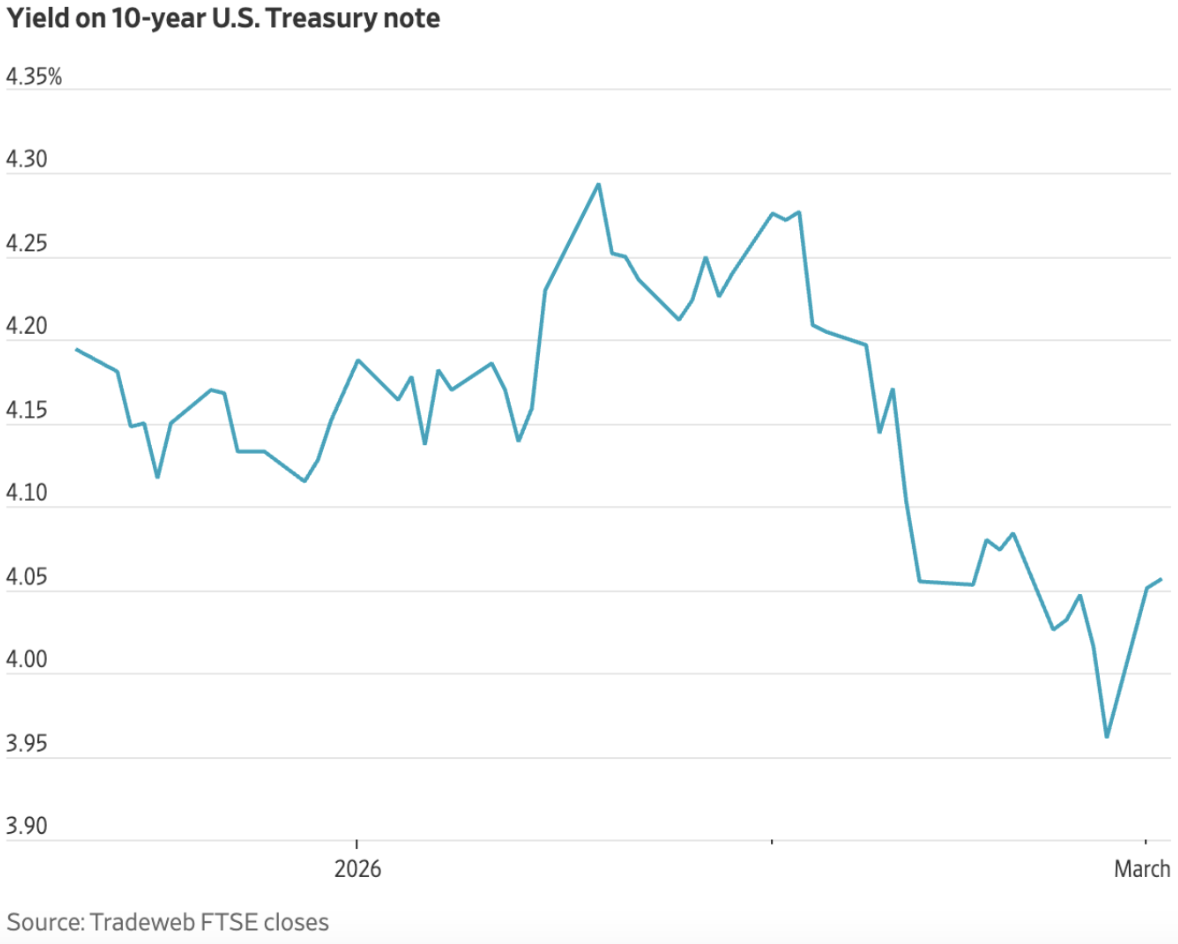
Normally, geopolitical risk drives investors toward government bonds, pushing yields lower. This time the opposite occurred. The yield on the benchmark 10-year U.S. Treasury note rose above 4 percent, reaching roughly 4.1 percent after its largest one-day increase since the previous summer. Bond prices move inversely to yields, the rise indicates that investors were selling Treasurys rather than buying them.
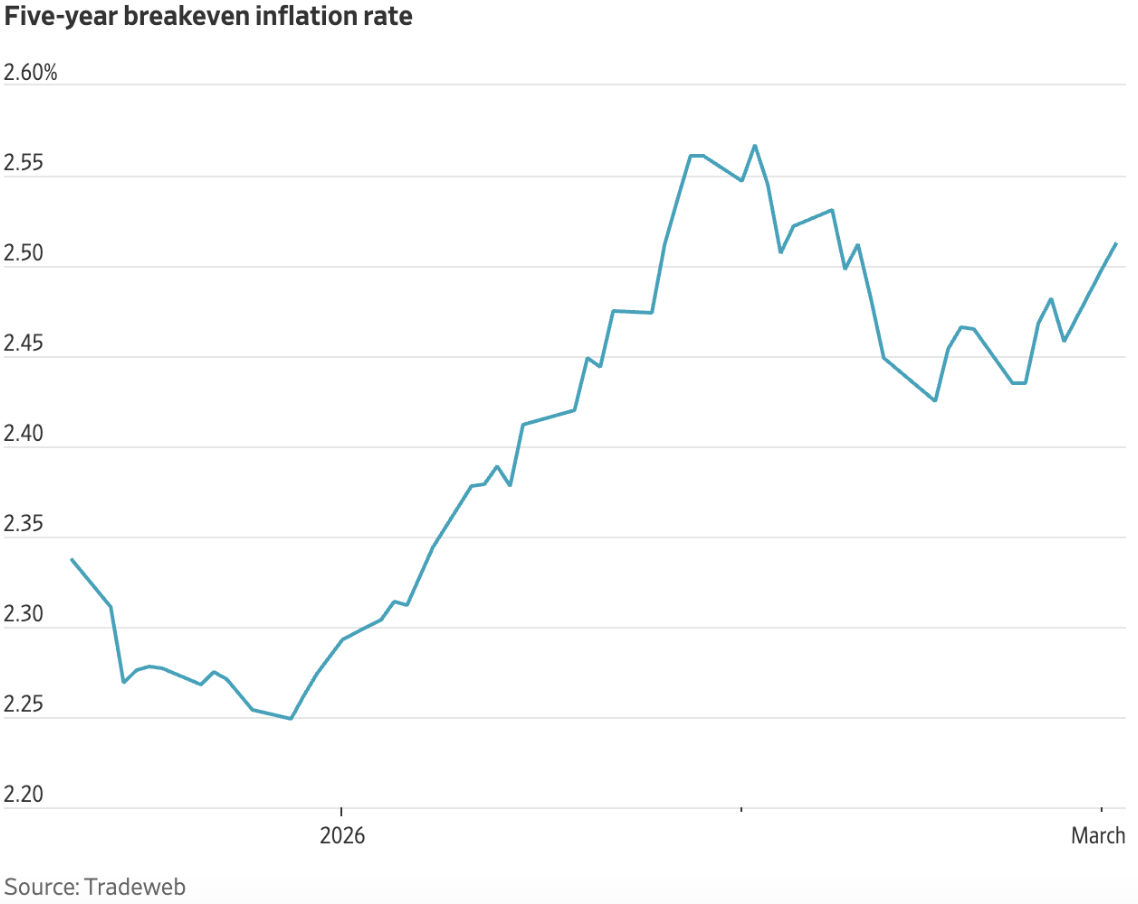
The main reason is inflation. Energy prices affect many individuals across the economy. Even though the Federal Reserve often focuses on “core” inflation measures that exclude food and energy, large oil shocks can still feed into broader price increases. Markets have already begun pricing in that risk. The difference between five-year nominal Treasury yields and five-year inflation-protected Treasurys has climbed above 2.5 percent. This shows that investors expect higher inflation in the coming years.
Higher inflation expectations also alter expectations for monetary policy. Prior to the conflict, markets widely expected the Federal Reserve to cut interest rates multiple times this year. Those expectations have declined. Federal-funds futures now suggest only about a 55 percent probability of two rate cuts, down from roughly 79 percent just days earlier. If inflation rises due to energy prices, the Fed may be forced to keep interest rates higher for longer to try and cool down the economy.
Traditionally, bonds provide protection when stock markets fall and many try to diversify their portfolio with both types of investments. In a typical 60/40 portfolio, 60 percent equities and 40 percent bonds, a 10 percent decline in stocks might normally be cushioned by rising bond prices. Yet in recent trading, bonds have fallen alongside stocks, weakening this traditional hedge.
Energy shocks have historically produced similar market reactions. When Iraq invaded Kuwait in 1990 and oil prices surged, Treasury yields initially rose as inflation fears spread. On the other hand, events like the September 11 attacks and the collapse of Lehman Brothers did not lead to decrease in bonds but rather prompted investors to flock to government bonds.
Today’s situation is also complicated by concerns about U.S. fiscal policy. The Congressional Budget Office recently raised its projected federal deficits for the coming decade by about $1.4 trillion. Federal deficits as a share of GDP are already unusually high outside of a recession, and debt held by the public is approaching levels last seen during World War II.
The composition of that debt has also changed. Unlike the mid-20th century, a large share of U.S. government bonds is now held by foreign investors, including many in Asia and the Middle East. If geopolitical tensions weaken foreign demand for Treasurys, the U.S. government may need to offer higher yields to attract buyers.
The result is a challenging environment for investors. Rising Treasury yields increase borrowing costs across the economy, affecting mortgages, corporate debt, and consumer loans. Earlier declines in yields had helped push 30-year mortgage rates below 6 percent for the first time in more than three years. Continued upward pressure could quickly reverse that progress.