The Bifurcation of the Commercial Real Estate Market
Source: Colliers
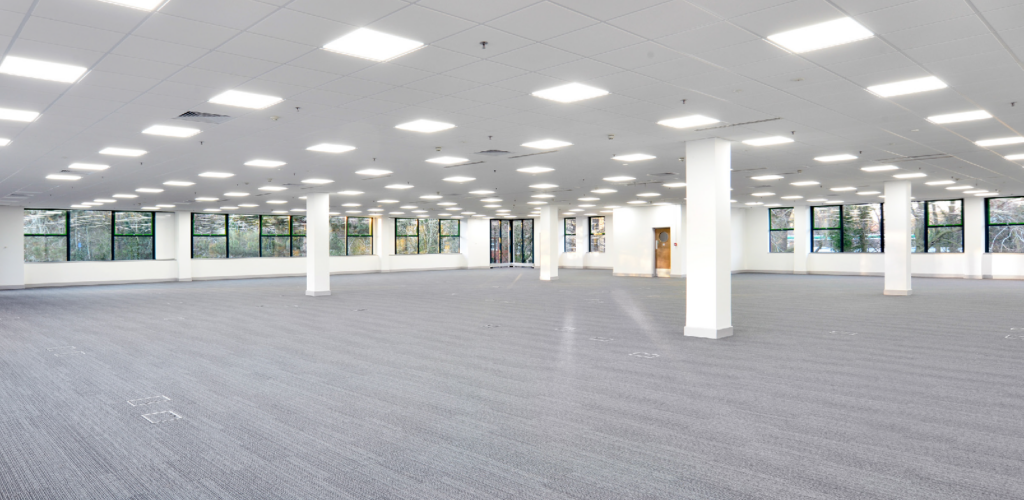
Commercial real estate in 2026 is not experiencing a unified collapse. There are now effectively two separate markets operating with entirely different dynamics.
Class A office towers in Manhattan are trading hands at premium prices, data centers are commanding 11.2% returns, and high-end retail is capturing an unprecedented share of leasing activity. Meanwhile, office buildings are selling for 90% discounts, foreclosures are climbing to 2008 levels, and downtown neighborhoods are struggling with minimal tenant interest. This divergence carries implications far beyond real estate.
The Numbers Don’t Lie About the Split
The data tells a story of extreme stratification. In Chicago, a 485,000-square-foot office building sold for $4 million last year, down from $68.1 million a decade ago. The Denver Energy Center went for $5.3 million after foreclosure, down from $176 million in 2013. According to Green Street, higher-quality office properties have dropped roughly 35% from their peak on average.
Yet in New York City, Class A office space is benefitting from rent growth and new leasing activity for the first time in years. Capital is flowing decisively toward the best assets while abandoning everything else.
The office delinquency rate for commercial mortgage-backed securities hit a record 12.34% in January 2026, the highest level since Trepp began tracking in 2000. More than half of roughly $100 billion in commercial real estate loans due this year are unlikely to repay at maturity. Yet institutional investors continue flooding capital into trophy properties and data centers, where returns remain robust.
According to the National Association of Real Estate Investment Trusts, publicly traded real estate companies boosted data center investments by 15% in 2024 while pulling back from traditional sectors. A CBRE survey found 95% of major investors planned to increase data center exposure. This flight to quality is restructuring the entire investment landscape.
Why This Matters More Than You Think
On the surface, this looks like normal market dynamics, where weak assets underperform and strong assets attract capital. But the bifurcation in CRE represents something much more troubling, a collapse in the middle.
The traditional commercial real estate market was built on the assumption of diversification. Office buildings lease to multiple tenants across different industries. Retail properties range from discount to luxury. Industrial warehouses serve varied supply chains. This spread across hundreds of thousands of properties meant that even in economic downturns, some segments would hold up while others struggled.
This is no longer the case. The winners (data centers, Class A office, and grocery-anchored retail) are so dependent on specific conditions: AI demand, premium tenant quality, and essential services. As a result, they've become less correlated with traditional real estate fundamentals.
Meanwhile, the losers (Class B and C office, suburban retail, and mixed-use projects that neither office nor residential conversion can fix) are caught in permanent structural decline. Hybrid work is permanent, and e-commerce has fundamentally reshaped retail. The commercial real estate industry itself is acknowledging that recovery is unlikely, leaving liquidation ahead.
Source: Park Place Technologies
The Banking System's Hidden Vulnerability
This fragmentation creates a cascading problem through the financial system that deserves far more attention than it's currently receiving.
Regional banks hold the largest share of commercial real estate debt, roughly 36% of the nearly $5 trillion outstanding, according to Trepp. These are the same banks that made aggressive CRE loans during the 2015-2021 lending cycle, when interest rates were low and default risk seemed remote. Now they're staring at borrowers who can't refinance because there's simply no refinancing market for Class B and C properties.
The largest money-center banks can absorb losses, but regional lenders, especially those concentrated in markets like Austin, Denver, and the Sunbelt, are entering what analysts describe as peak distress. The consequences extend far beyond real estate. When these banks restrict lending, small business lending contracts, residential mortgage availability tightens, and local development halts.
This pattern isn't new. The 2008 financial crisis propagated through regional bank weakness in commercial real estate in much the same way.
The AI Wild Card
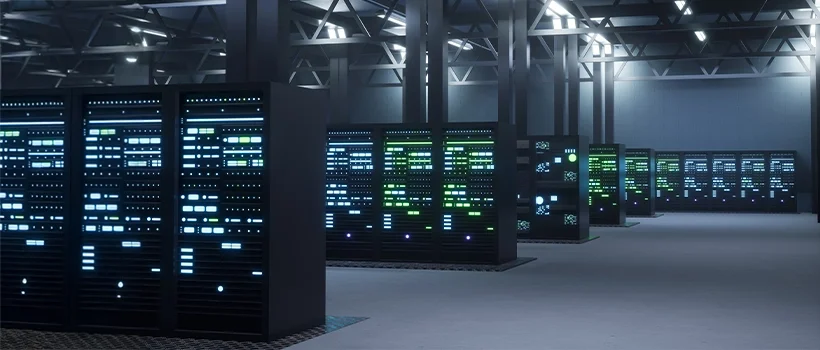
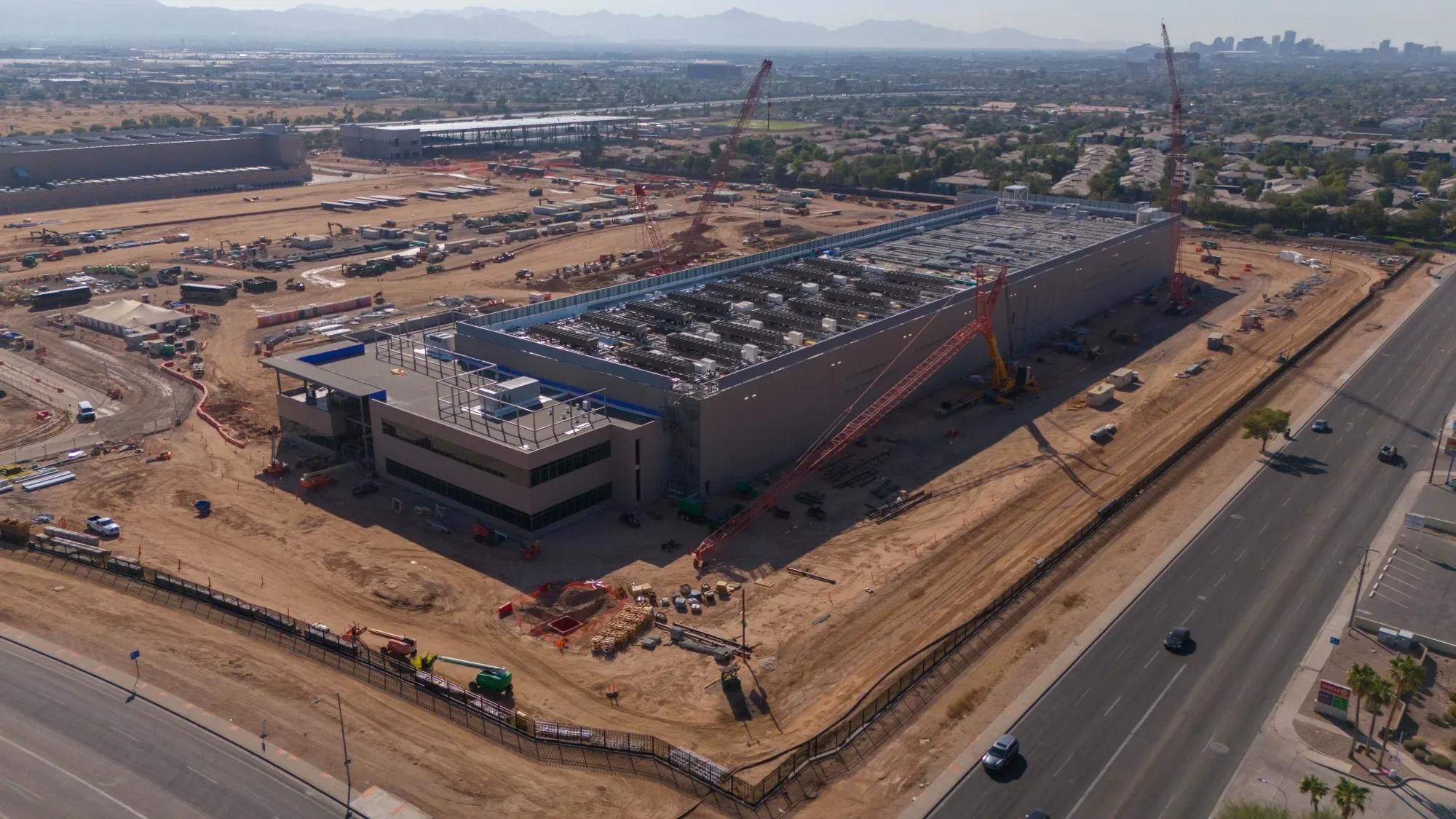
The "winners" in today's market are increasingly dependent on artificial intelligence. Data centers are thriving because hyperscalers like Meta, Amazon, and Oracle are racing to build out AI infrastructure. The sector returned 11.2% last year, better than nearly any other real estate category. McKinsey estimates North America could see $1 trillion worth of new data center construction between 2025 and 2030.
Yet this growth assumes sustained AI demand. Data center operators argue that long-term leases (often 15-20 years) insulate them from disruption. However, these leases include termination clauses if developers miss deadlines, fail to secure power, or can't maintain uptime. Tariffs are already driving up construction costs, supply chains are strained, and labor shortages are real.
For now, the sector continues to attract capital based on the strength of AI demand forecasts.
Source: Bloomberg News
The Real Estate Market as a Microcosm
The commercial real estate market's bifurcation reveals how capital behaves during periods of stress.
When uncertainty rises, investors pull money from uncertain bets and concentrate it in the safest, highest-quality assets. Winners benefit from cheaper capital and aggressive bidding. Everyone else loses the marginal buyer that keeps markets functioning. Without marginal demand, distressed assets decline in value.
This triggers a feedback loop. Properties collapse, owners can't refinance, defaults accelerate, lenders tighten standards, and the market fragments further. For commercial real estate, this loop is already in motion. Over $25 billion in CMBS loans are now past maturity without being paid off, liquidated, or formally extended; the highest level since 2013. This data underscores how far the deterioration has advanced.
What Comes Next
The commercial real estate market of 2026 is diverging in ways that advantage those with the capital to acquire distressed assets, while pressuring traditional investors. Regional banks face mounting losses, distressed sales will likely accelerate, and the middle tier of commercial real estate is being compressed into either trophy assets or liquidation sales.
Meanwhile, the data center sector continues benefiting from AI infrastructure demand, with investors allocating significant capital to the space. Yet this concentration in a single sector carries its own vulnerabilities, as data center leases include termination clauses tied to power availability, construction timelines, and uptime guarantees, conditions that may prove challenging as tariffs drive up construction costs and supply chains tighten.
For the rest of the commercial real estate market, the challenge isn't managing new risks, it's surviving a structural reshuffling that's already well underway.
